Gulf sovereign capital: what US managers should prepare before the first meeting
Sovereign funds in the Middle East and North Africa deployed $102 billion in the first nine months of 2026, and the United States received the largest share. The institutions behind that capital invest with large internal teams and clear sector priorities, and a US manager approaching them needs to be prepared accordingly.
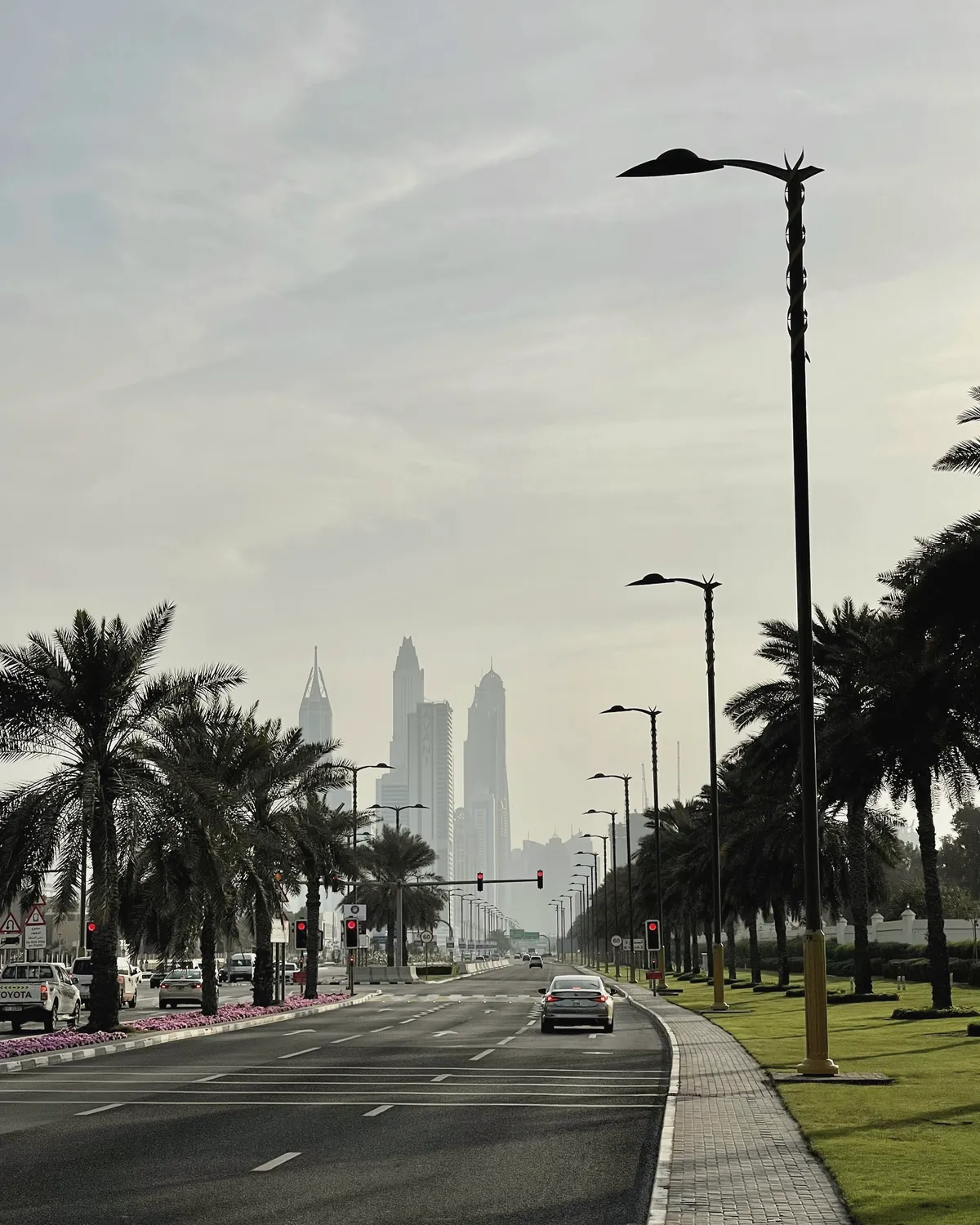
Sovereign wealth funds in the Gulf are among the most active investors in the world, and most of what they invest leaves the region. For a US manager, that makes them an obvious name on the list. It also makes them one of the most contested audiences in private markets. The figures below show where the capital has gone this year, and what that suggests about how to approach it.
Where the capital has gone in 2026
Global SWF's 2026 Mena Playbook, as reported by Khaleej Times on 1 October, counts $102 billion deployed by sovereign funds in the Middle East and North Africa across 245 transactions in the nine months to 30 September. That represents 39% of all dealmaking by state-owned investors globally over the period.
Mubadala led with $26.2 billion. The Public Investment Fund of Saudi Arabia followed with $14 billion, then the Abu Dhabi Investment Authority (ADIA) with $12.2 billion, L'imad with $10.8 billion and the Qatar Investment Authority with $10.3 billion.
Around 81% of the total went abroad, and the United States took 45% of the value invested, the largest share of any country. China including Hong Kong took 10%, the United Kingdom 7% and Singapore 3%.
By sector, technology, including rounds tied to artificial intelligence, was the most active, at 28% of deals by volume and close to 30% by value. Infrastructure took 22% and financial services 14%. Real estate fell to 5% of deals by volume and 11% by value.
These are deployment figures. They cover direct deals and commitments together, and they do not show how much went into third-party funds specifically.
How one of the largest allocators is changing its mix
ADIA's 2025 Review, as reported by The National and Enterprise in September, gives a view of how a large Gulf allocator is setting its portfolio for the years ahead. ADIA raised its long-term private equity range to 15% to 20%, from 12% to 17%. Its range for financial alternatives, which includes hedge fund strategies, rose to 7% to 12%, from 5% to 10%. Its real estate range fell to 2% to 7%, from 5% to 10%.
The same reports note that some 63% of ADIA's assets were managed internally in 2025, and that its private equity unit took part in GP-led secondaries and single-asset continuation vehicles. Its reported 20-year and 30-year annualised returns were 6.6% and 7.2%.
Two points follow for an external manager. More room has been made for private equity and hedge fund strategies, and less for real estate. And a large part of the portfolio is run by in-house teams, which means the people reviewing an external fund are often investors in the same asset class themselves.
Sovereign capital moves on its own timetable. The preparation has to be finished before that timetable starts.
What a US manager should prepare
The figures describe what these institutions have done. They do not describe how any one of them will treat a particular fund. Each has its own mandate and its own process. With that caveat, four points of preparation apply to most approaches.
A case that fits the sector priorities. Technology and infrastructure have taken the largest share of recent deployment, and real estate a much smaller one. A manager in a sector outside those priorities can still raise from these institutions, and should expect to explain clearly why the strategy belongs in a portfolio that is already weighted elsewhere. A real estate manager in particular should expect close questions from allocators that are reducing their range for the asset class.
Materials written for an expert reader. Where a sovereign fund runs large internal teams, the people reading the materials often invest directly in the same deals the manager targets. They will test the sourcing claims and the value creation plan in detail. Materials that hold up with a generalist allocator may not hold up with a specialist one.
A view on co-investment and secondaries. The deployment figures above include direct deals, and ADIA's reported participation in GP-led secondaries and continuation vehicles shows that large Gulf allocators work across several routes into the same assets. A manager should know in advance what co-investment it can offer, on what terms, and how that sits alongside the main fund. That conversation tends to come early.
Time, and continuity of contact. Large sovereign institutions run their own committee schedules, and a commitment can take many months from the first meeting. A manager that approaches once and waits is easily overtaken by those that keep the relationship current with regular, substantive updates. Investor relations work begins well before any commitment.
A note on concentration
The same Gulf allocators are also being approached by the largest global platforms, often first. A smaller US manager is unlikely to win attention on size. The more likely route is a specific strategy that fits a stated priority, presented by people who understand how these institutions review a fund.
Our view
Gulf sovereign capital is active, and a large share of it is invested in the United States. It is also concentrated in a small number of institutions with expert internal teams and long decision cycles. The managers best placed to raise from them are the ones who arrive with a clear sector fit, materials built for a specialist reader and a considered position on co-investment, and who plan for a relationship measured in years.
Sources
- Khaleej Times, "UAE's Mubadala leads as Mena SWFs spend Dh374 billion despite US-Iran war" (citing Global SWF's 2026 Mena Playbook), October 1, 2026
- The National, "Abu Dhabi wealth fund Adia says tech remains major investment theme this year", September 10, 2026
- Enterprise, "ADIA widened private market allocations in 2025 as it leans into PE, hedge funds and secondaries", September 11, 2026
Figures are as stated by the sources listed, at the dates given. Deployment figures include direct investments and are not limited to fund commitments. Inaya Advisory is not affiliated with any institution named in this article. For information only. Nothing here constitutes an offer or solicitation to buy or sell any security.